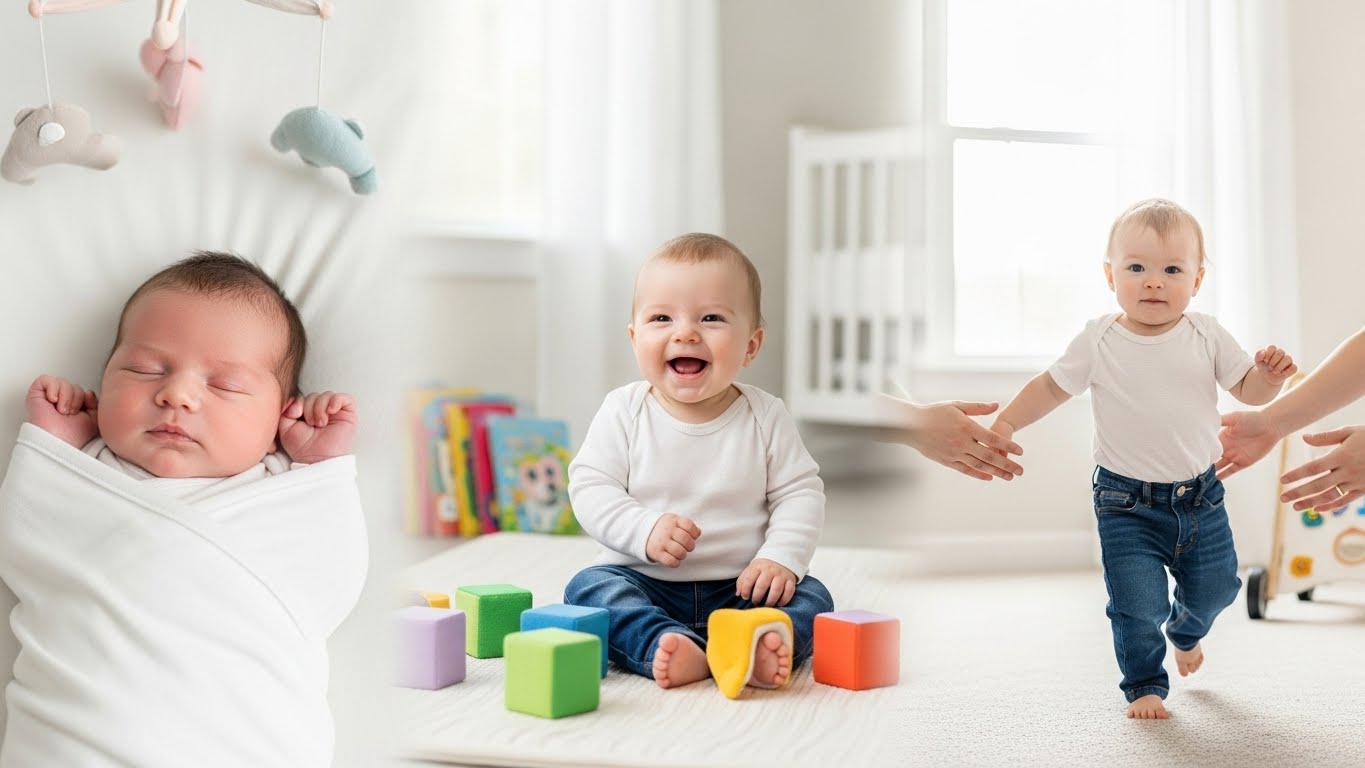
The first year of your baby’s life is a whirlwind of rapid changes and exciting "firsts." These markers of progress are known as developmental milestones. While every baby develops at their own pace, having a general map of what to expect can help you support your little one’s growth and know when to celebrate their achievements.
0–3 Months: Discovery and Connection During these early months, your baby is getting used to the world.
Physical: They start to lift their head during tummy time and begin to push up with their arms.
Social/Emotional: You’ll see the first "social smile" around 2 months—a truly magical moment!
Communication: They start cooing and making vowel sounds like "ah-ah" or "oh-oh."
4–6 Months: Finding Balance This is the stage where babies become much more active and aware.
Physical: Rolling over from tummy to back (and eventually back to tummy) usually happens now. By 6 months, many babies start sitting with a little support.
Sensory: They reach for toys with one hand and love putting things in their mouth to explore.
Communication: They begin to babble and respond to their own name.
7–9 Months: On the Move Independence begins to kick in as your baby starts to move around.
Physical: Most babies start to crawl, scoot, or "army crawl." They can sit without support and may even pull themselves up to stand while holding onto furniture.
Cognitive: They start to understand "Object Permanence"—the idea that an object still exists even if it's hidden under a blanket.
Social: Separation anxiety may start as they become more attached to their primary caregivers.
10–12 Months: The Road to Toddlerhood Your baby is preparing for their biggest milestone yet: walking!
Physical: They can "cruise" (walk while holding onto furniture) and may take their first independent steps. They use the "pincer grasp" (thumb and forefinger) to pick up small pieces of food.
Communication: You might hear their first meaningful words like "Mama" or "Dada." They can follow simple commands like "Give me the ball."
Social: They love imitating gestures, like waving "bye-bye" or clapping their hands.
A Note for Parents: Milestones are not a race. Some babies walk at 9 months, while others wait until 15 months—both are perfectly normal. Use these as a guide rather than a strict deadline. If you have concerns about your baby's development, always consult your pediatrician for a professional assessment.
Conclusion: Cherish every moment of this first year. Before you know it, your tiny newborn will be a curious toddler exploring the world on two feet. Keep your camera ready—there is a new milestone waiting just around the corner!